
Balkan Spirits & Liqueurs
Živjeli! Dobrodošli! While our wines and beers are fantastic, the world of Balkan spirits, particularly Rakija, is where tradition, flavour, and strength truly meet.
From the potent fruit brandies distilled with generations of knowledge in family homes to the aromatic herbal and sweet fruit liqueurs enjoyed on special occasions, this category is as diverse and spirited as the region itself.
Whether you're planning a trip and want to know what to expect when offered a glass, or you're looking to find that authentic taste of the Balkans to bring home, get ready for a journey into the stronger side of local drinks. Let's pour a small one and explore!
What You'll Find Here: Your Guide to Balkan Spirits
Ready to get acquainted with the potent and flavourful world of Balkan spirits and liqueurs? In this section, we'll guide you through the key players:
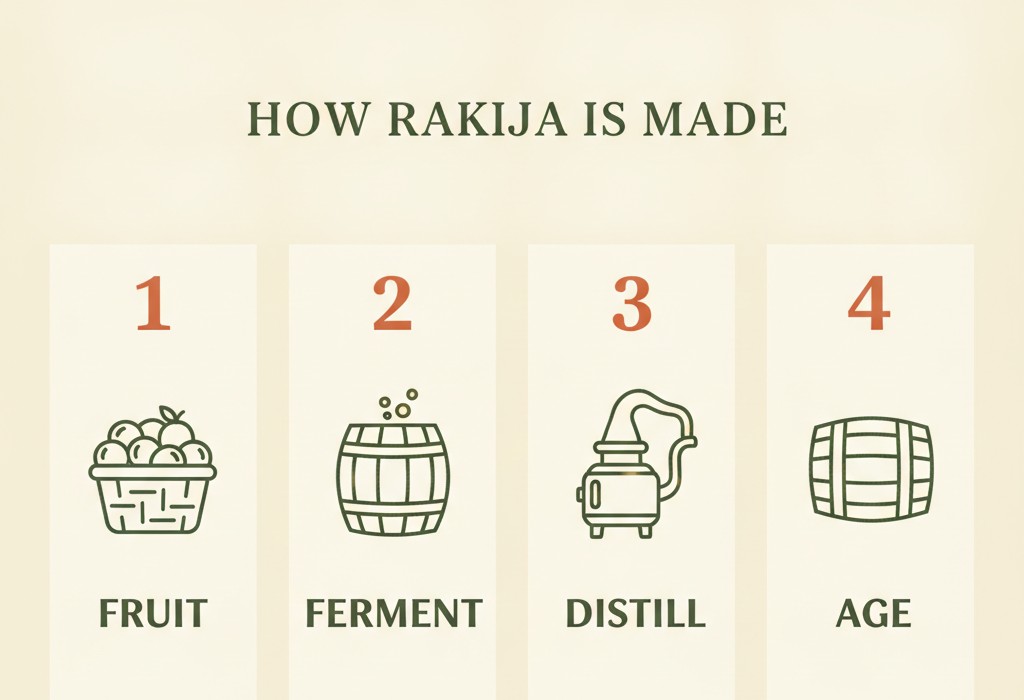
- Rakija: The Balkan Icon: Dive deep into the most famous Balkan spirit. Learn about what it is, how it's made, and the incredible variety based on the fruit (or sometimes herbs) used.
- Types of Rakija: Explore the stars like Šljivovica (plum), Kajsijevača (apricot), Viljamovka (pear), Dunjevača (quince), Lozovača (grape), and Travarica (herbal), among many others!
- Other Local Spirits & Liqueurs: Discover traditional liqueurs made from herbs, nuts, or fruits that offer different flavour profiles and are often enjoyed as digestifs or aperitifs.
- Distilleries & Brands: Explore profiles of the passionate producers, from large distilleries to smaller artisanal makers, and the specific brands crafting these beverages today.
- History & Rituals: Uncover the deep cultural significance of Rakija and other spirits, their role in traditions, celebrations, and everyday life.
- Perfect Pairings: Get ideas for pairing these strong drinks with delicious local foods – because there's always something tasty to accompany a glass!
A Spirit Older Than Borders: The History of Rakija
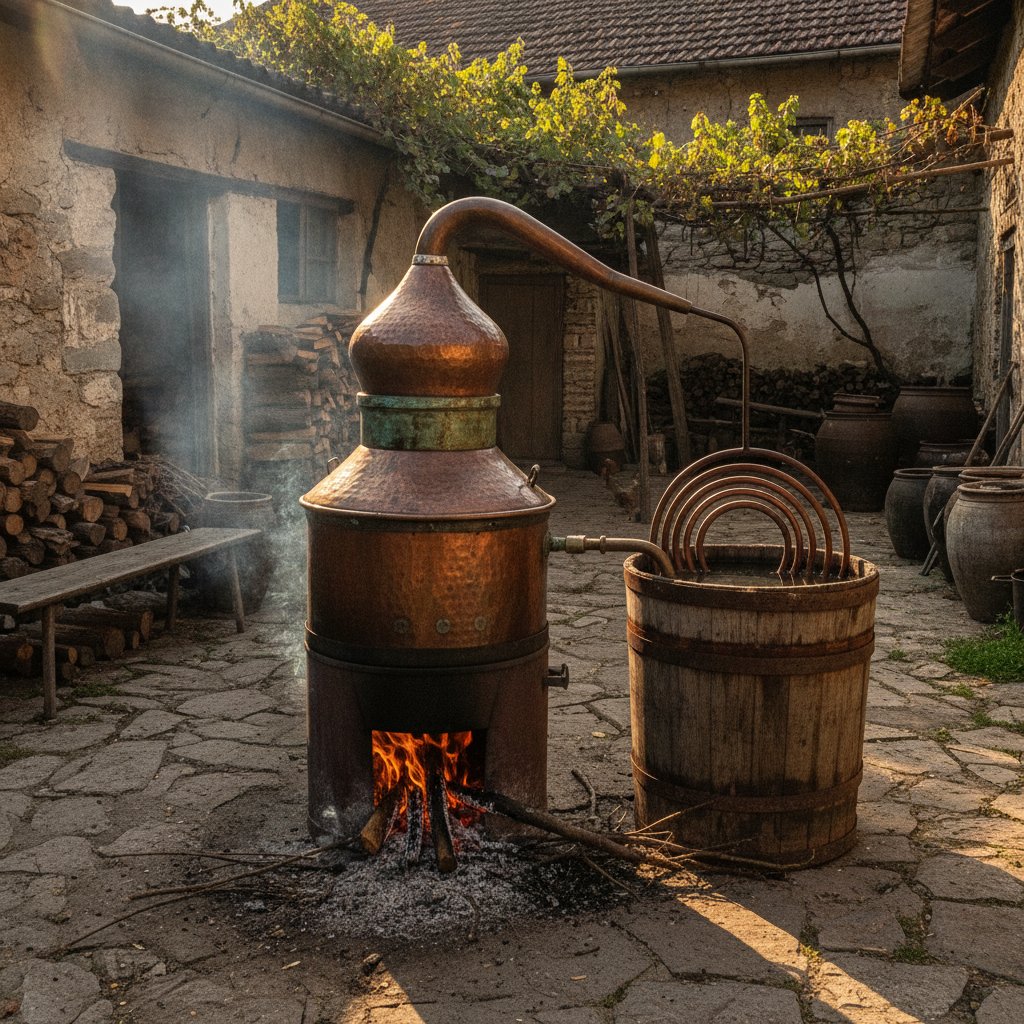
Distillation knowledge reached the Balkans centuries ago, likely carried along Ottoman trade and monastic routes, and it found perfect conditions here: fruit-heavy orchards, especially plums, and rural households with every reason to turn a glut of ripe fruit into something that keeps. What started as a practical way to preserve a harvest became something closer to a household craft passed down through generations — most rural families historically made their own, at least a little, and many still do.
For most of its history rakija lived almost entirely outside formal industry — a home product, not a commercial one, made in small copper stills after the fruit harvest each autumn. That's changed somewhat in recent decades: the EU has recognized 12 Bulgarian rakia varieties and 6 Croatian rakija products with formal Protected Designation of Origin or Geographical Indication status, and commercial distilleries now bottle versions of drinks that were, for centuries, never meant to leave the village.
Rakija and Beyond: A World of Flavor
Rakija is the umbrella term for fruit brandy popular across the Balkans, but saying "Rakija" is just the beginning! The flavour changes dramatically depending on the fruit it's made from. Šljivovica (plum) is perhaps the most iconic, but don't miss the aromatic Dunjevača (quince), the smooth Viljamovka (pear), or the bracing Travarica (herbal).
Beyond Rakija, the region produces various liqueurs (likeri) that are often sweeter and lower in alcohol, made by infusing fruits, herbs, or nuts in a base spirit. Pelinkovac (herbal bitter) and Medica (honey liqueur) are popular examples.
| Type | Base | Typical ABV | Character |
|---|---|---|---|
| Šljivovica | Plum | 40–50% | Warm, fruity, the most iconic of them all |
| Kajsijevača | Apricot | 40–45% | Delicate and aromatic |
| Viljamovka | Williams pear | 40–45% | Smooth, floral |
| Dunjevača | Quince | 40–45% | Aromatic with a slightly tart edge |
| Lozovača | Grape | 40–45% | Closer in style to Italian grappa |
| Travarica | Herb-infused grape brandy | 40–45% | Bitter, medicinal, an acquired taste |
How to Drink Rakija Like a Local
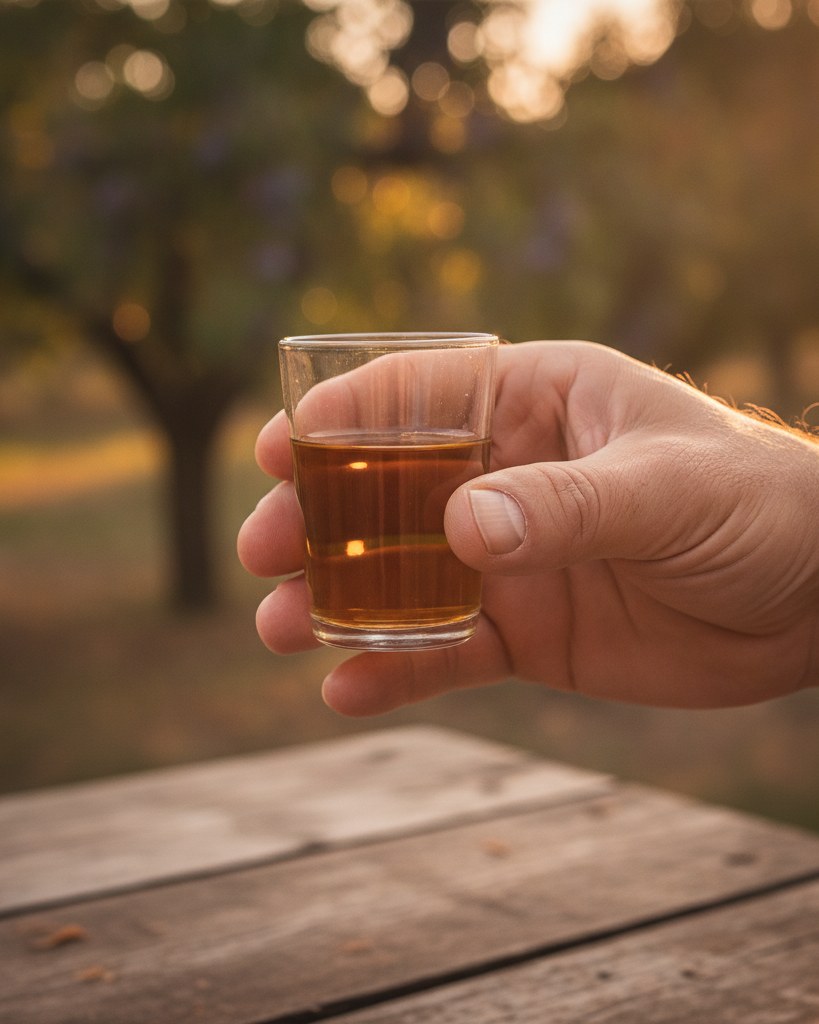
Rakija is served in small glasses — typically 30 to 50ml, not a full shot glass slammed back, but sipped with at least a little respect for something that's often 40%+ ABV. Unlike beer or wine, it's usually served at room temperature rather than chilled. And it almost never arrives alone: expect a small plate alongside it — pickled vegetables, a slice of cheese, cured meat — since rakija is as much a social ritual as a drink.
That ritual starts before you've even decided you want a drink. Being offered rakija is how hospitality gets expressed here, and in parts of Montenegro and rural Serbia, a small glass with morning coffee isn't unusual at all. Whatever the hour, the same rule applies as with beer and wine: don't drink before the toast.
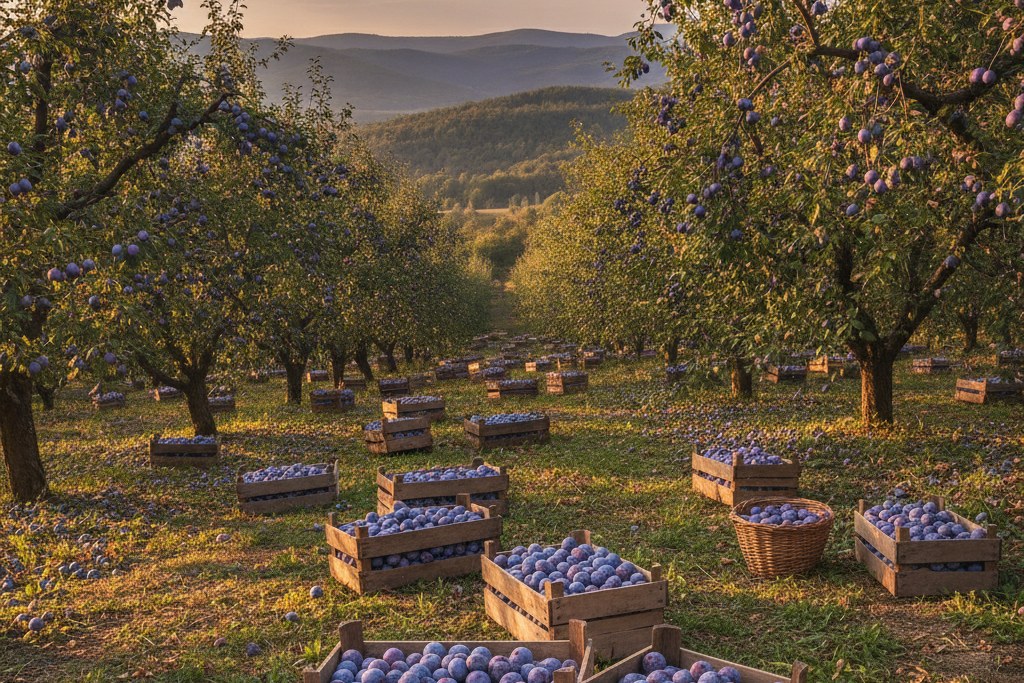
Every glass starts somewhere far less glamorous than the table it ends up on — usually an orchard like the one below, weeks before the fruit ever gets near a still. Most producers won't tell you exactly which plum trees make it into their best batch, but they'll all agree the fruit matters more than the equipment.
Ready to Explore?
This section is just getting started — country-by-country spirits guides and individual distillery profiles are on the way. Each country handles rakija a little differently: expect different fruit preferences, different serving customs, and different local names for the same basic idea once those guides go live.
In the meantime, check back soon, or explore our Beers and Wines sections while you wait.
Croatian Spirits & Liqueurs
Coming soon
Serbian Spirits & Liqueurs
Coming soon
Bosnian Spirits & Liqueurs
Coming soon
Montenegrin Spirits & Liqueurs
Coming soon
Frequently Asked Questions
What is rakija?
Rakija is the umbrella term for fruit brandy made across the Balkans, traditionally distilled at home from a single fruit — most iconically plum (Šljivovica), but also apricot, pear, quince, and grape.
How strong is rakija?
Commercial rakija typically runs 40–50% ABV, though homemade versions are often distilled stronger, sometimes reaching 50–80%. It's meant to be sipped, not treated like a standard shot.
What's the difference between rakija and slivovitz?
They're essentially the same drink under different names. "Slivovitz" is the more internationally recognized spelling (used in English and German), while "šljivovica" is how it's written and said across the former Yugoslav countries.
Is rakija the same in every Balkan country?
The base idea is shared, but the details vary — different countries favour different fruits, different ABV ranges, and different serving customs, and several specific varieties now carry EU-recognized regional protection (12 in Bulgaria, 6 in Croatia).
How should rakija be served?
In a small glass (30–50ml), at room temperature, usually alongside a small snack like pickled vegetables or cheese, and always after a toast — never before.
Živjeli! (Cheers!) Enjoy exploring the strong and flavourful world of Balkan spirits and liqueurs!