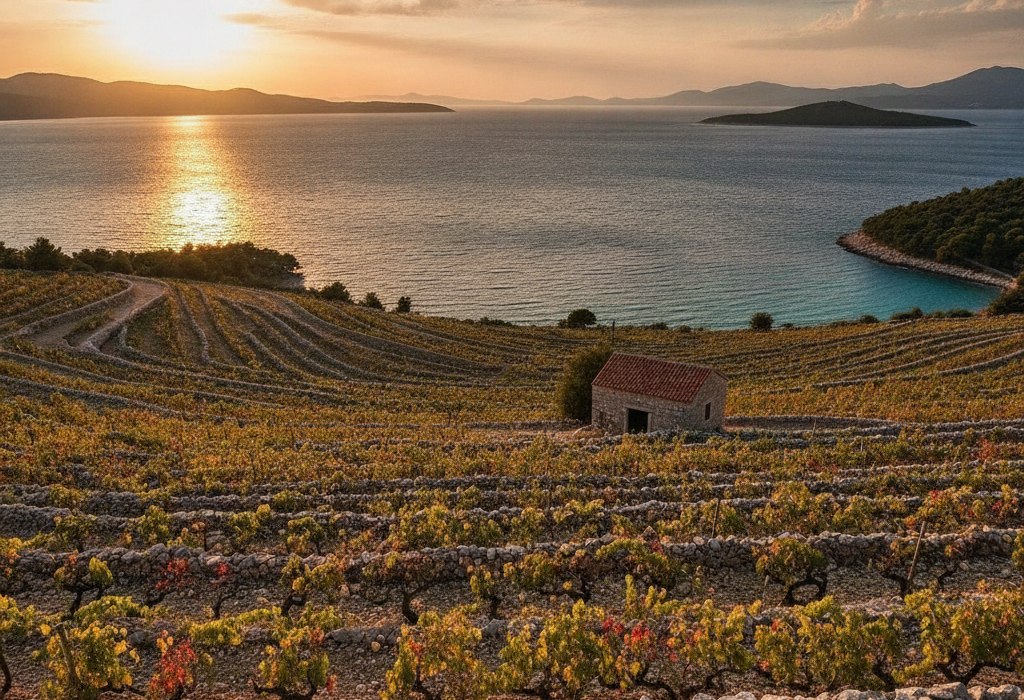
Grgić Vina
Živjeli! Some winery stories start with a family recipe. This one starts in Napa Valley, at a blind tasting that changed wine history. Miljenko "Mike" Grgich left communist Yugoslavia in 1954 with almost nothing, and two decades later his 1973 Chardonnay for Chateau Montelena beat France's finest at the 1976 Judgment of Paris — the tasting that put California wine on the map.
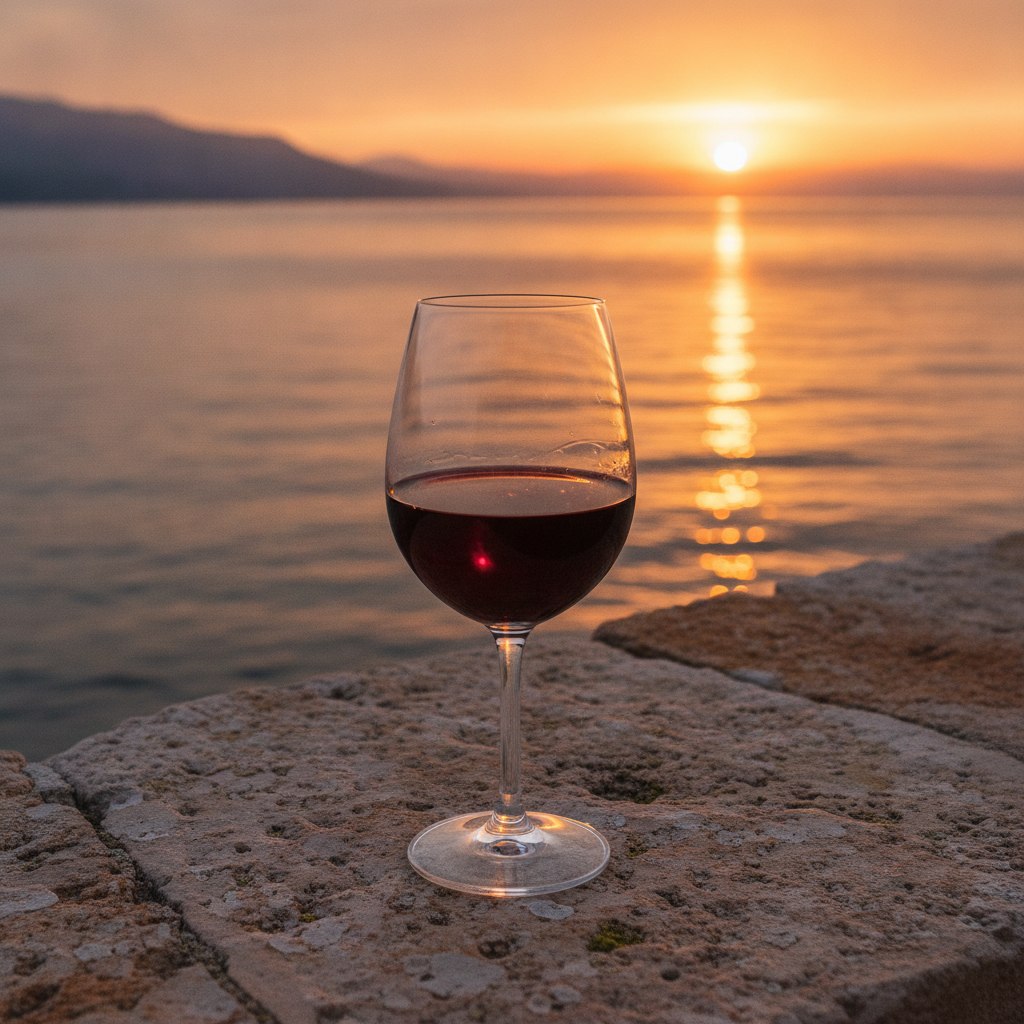
Grgić Plavac Mali
14% ABVIn 1996, at an age when most winemakers are slowing down, Grgich came home. He founded Grgić Vina in Trstenik on the Pelješac peninsula, less than 50 kilometres from the village where he was born, and set out to prove that Croatia's own native grapes deserved the same respect he'd given Chardonnay in California.
The winery makes exactly two wines — Plavac Mali and Pošip — and nothing else. No second labels, no international varietals, no expansion for its own sake. Let's find out why that restraint is the whole point.
From the Judgment of Paris to Pelješac: The History of Grgić Vina
Mike Grgich was born in 1923 in the small Dalmatian village of Desne, and left Yugoslavia in 1954 with a wine-making degree and little else, eventually landing in California. He went on to make the 1973 Chateau Montelena Chardonnay that famously beat top white Burgundies at the 1976 "Judgment of Paris" — the tasting credited with putting California wine on the world map — before founding his own celebrated Napa winery, Grgich Hills Estate.
But Grgić never stopped thinking about home. In 1996, together with his daughter Violet Grgić and his nephew Ivo Jeramaz, he opened Grgić Vina in Trstenik on the Pelješac peninsula, planting Plavac Mali in the famous Dingač vineyard and sourcing Pošip from Čara on the island of Korčula. In 2001, working with UC Davis professor Carole Meredith, Grgić helped trace the genetic roots of California Zinfandel back to Croatia's own Plavac Mali and Crljenak Kaštelanski — closing a scientific loop that had puzzled winemakers for decades.
Mike Grgich passed away in December 2023 at the age of 100, but the winery he built to honour his homeland's grapes continues exactly as he intended it — small, focused, and utterly uncompromising on quality.
The Taste: Just Two Wines, Both Vrhunska
Grgić Vina makes precisely two wines, and both carry Croatia's top quality classification, vrhunsko vino (premium wine):
- Plavac Mali: Sourced from the Dingač vineyard on Pelješac's steep, sun-baked southern slopes. Full-bodied and structured, with dark cherry and blackberry fruit, a herbal Mediterranean edge, and the firm tannins Plavac Mali is known for. It has twice been named the best red wine in Croatia.
- Pošip: Grown in Čara on the island of Korčula, this white is crisp yet full-flavoured, with citrus and stone-fruit notes and a mineral backbone that reflects the island's rocky terroir.
There is no entry-level range, no blend, no second label — just two wines made from Croatia's own grapes, at the level Grgić would have demanded of a Napa Cabernet.
More Than Wine: Grgić Vina's Place in Croatian Winemaking
- A homecoming with international credibility: Few Croatian wineries can claim a founder who reshaped global wine history before returning to bottle his native grapes.
- Solving the Zinfandel mystery: Grgić's genetic research helped prove that California's beloved Zinfandel and Croatia's Plavac Mali share the same ancestral root, Crljenak Kaštelanski — a discovery that put Dalmatian viticulture on the scientific map.
- Proof of concept for native grapes: By refusing to plant a single international varietal, Grgić Vina made the case that Plavac Mali and Pošip could stand on the world stage without imitating Bordeaux or Napa.
Perfect Pairings: Enjoying Grgić Wines with Dalmatian Food
Both wines were built with the Dalmatian table in mind:
- Plavac Mali: A natural match for Peka-style slow-roasted lamb or octopus, grilled steak, or aged Pag cheese — the tannins need rich, fatty food to soften against.
- Pošip: Pairs beautifully with fresh Adriatic seafood, black risotto, or a simple plate of Dalmatian prosciutto and olives.
Finding Grgić Vina Wines
- At the source: The winery in Trstenik offers tastings, and its wines are poured at its associated restaurant nearby — check grgic-vina.com before visiting.
- Across Croatia: Available at better wine shops and restaurants along the Dalmatian coast and in Zagreb.
- Internationally: Thanks to Grgić's Napa connections, these wines are more widely exported to the US than most small Croatian producers — look for them at specialty importers.
Živjeli uz Grgić Vina! A toast to the man who proved a small Dalmatian grape could hold its own on the world's biggest stages — twice.