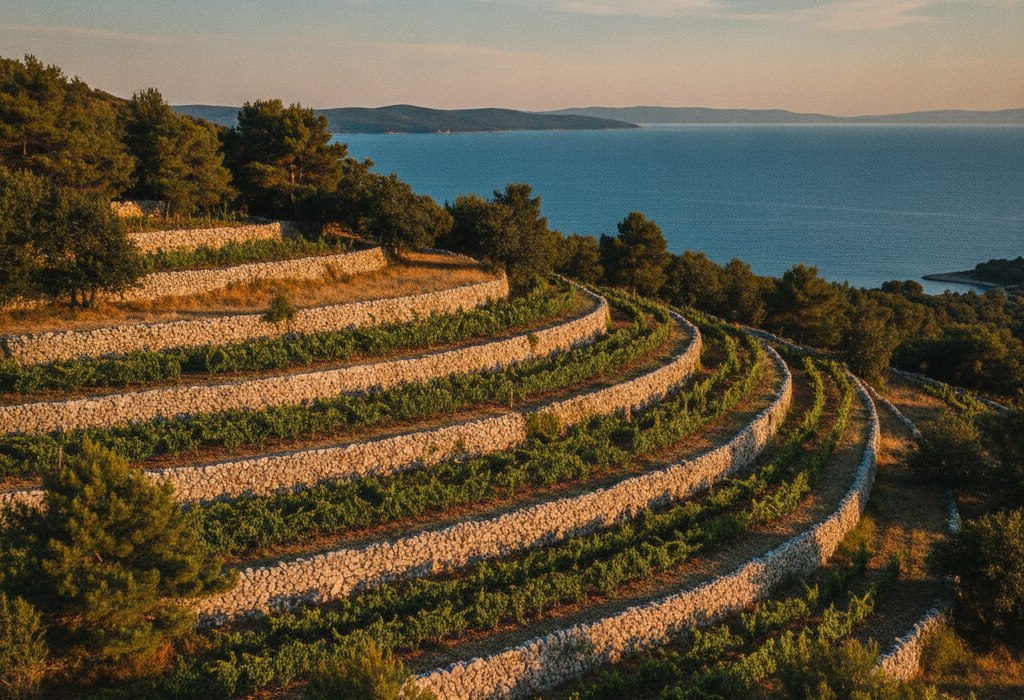
Krajančić
Živjeli! Some wineries chase variety. Krajančić chases exactly one thing: Pošip, grown on 3.5 hectares in the Čara hills of Korčula island, and nothing else. It's a small, deliberate bet on a single indigenous grape — and it's paid off.
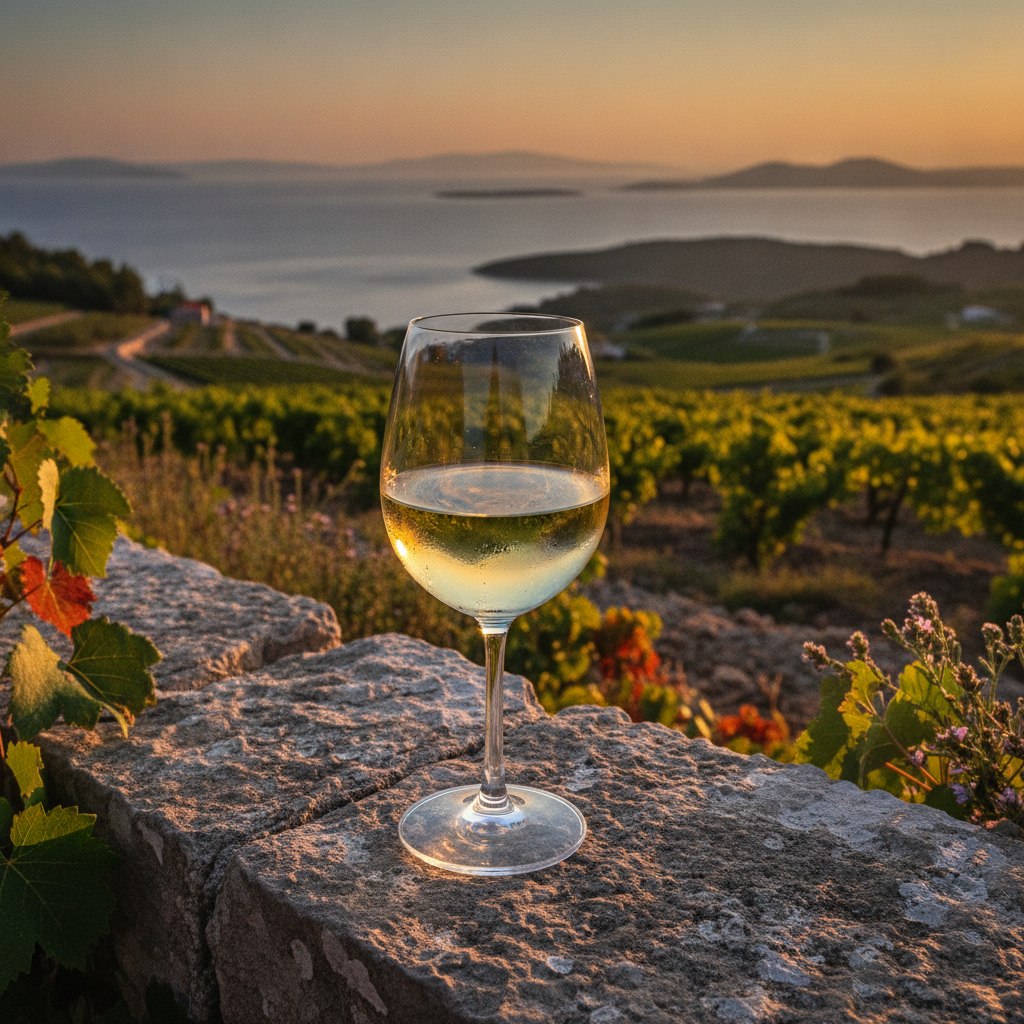
Krajančić Intrada
13% ABVThe family's connection to this land goes back further than most Croatian wineries can document at all: their name appears in Venetian census records from 1538, already listed as olive-oil producers and winemakers. Luka Krajančić revived that dormant tradition commercially in 1993, choosing to focus the entire small estate on Pošip rather than spreading across multiple varieties.
Pošip itself has a precisely documented origin — the first vine was discovered in the fields of Čara and neighbouring Smokvica in 1864, and it has been the signature white of this stretch of Korčula ever since. Let's see what one family, one grape, and nearly five centuries of history can produce.
From an Olive Grove to a Single-Grape Estate: The History of Krajančić
The Krajančić family's connection to the land around Čara, on Korčula island, is documented in Venetian census records dating to 1538 — at the time, the family was already known as olive-oil producers and winemakers, part of a winemaking tradition on Korčula that stretches back well over 500 years.
That tradition lapsed for stretches over the centuries, as it did for many small island families, until owner Luka Krajančić made the decision in 1993 to revive it as a serious commercial winery. Rather than diversifying into multiple grapes, Luka made a deliberate, narrow bet: the estate's 3.5 hectares would grow nothing but Pošip.
Pošip itself is a grape with an unusually precise origin story — the first vine was discovered in the fields of Čara and neighbouring Smokvica in exactly 1864, and it has remained tied almost exclusively to this small corner of Korčula ever since, rarely grown with any real success elsewhere.
The Taste: One Grape, Multiple Expressions
With only one variety in the ground, Krajančić's range is defined entirely by how each vintage and site expresses Pošip:
- Intrada: The estate's best-known label — classic in style, full of ripe fruit, good texture, and a moderate body that has made it a favourite on the domestic market.
- Estate Pošip: A crisper, more everyday expression of the same grape, still carrying the herbal, stone-fruit character that defines Korčula's Pošip.
For comparison, the island's other well-known Pošip, Marko Polo from the PZ Čara cooperative, comes from the same isolated, sun-baked limestone soils nearby — a useful benchmark for tasting how much individual sites within Čara and Smokvica can vary.
More Than Wine: Krajančić's Place on Korčula
- A near-500-year documented lineage: Few Croatian wineries can point to a family name in a 1538 census record tied to the exact same land they farm today.
- Total commitment to one grape: Growing only Pošip is a genuinely rare choice, and it means every bottle is a pure, unblended statement about what this specific corner of Korčula can do.
- Part of Pošip's precisely dated story: Tied to the exact 1864 origin of the grape itself, Krajančić sits at the heart of one of Croatia's most specific and well-documented indigenous-grape stories.
Perfect Pairings: Enjoying Krajančić Wines with Island Food
Pošip's texture and acidity make it a natural match for Korčula's seafood-driven table:
- Intrada: Pairs beautifully with grilled fish, seafood risotto, or a simple plate of island prosciutto and cheese.
- Estate Pošip: Try it with lighter shellfish dishes or as a refreshing aperitif on a warm island evening.
Finding Krajančić Wines
- At the source: The family's small cellar in Čara welcomes visitors — a highlight of any Korčula wine-tasting trip.
- Across Croatia: Available at Dalmatian restaurants and specialty wine shops, particularly around Korčula and Split.
- Internationally: Krajančić's Intrada has found its way to specialty importers seeking authentic, single-varietal Pošip.
Živjeli uz Krajančić! To one family, one grape, and nearly five centuries on the same Korčula hillside.